Using Rewards Effectively
First, I want to acknowledge Alfie Kohn for the clarity he has brought to the terrible problem of the misuse of rewards in his book Punished by Rewards. One the one hand, rewards can work in the best interests of the client, the misbehaving one, and change a life for the better. On the other hand, people continue to use rewards, like praise and star charts, without actually benefitting anyone.
It’s time to stop the misuse of rewards and do something for children who need our help the most. We have to be positive, present, and loving in times of trouble. Expressing warmth and care are the drywall finishing skills of teaching and parenting. It’s not as easy as it looks. The smooth, flat walls of life we can take for granted, but the studs weren’t pretty. Then came the skilled drywall finishers. You might have watched them do their thing and noted how simple it appeared to do.
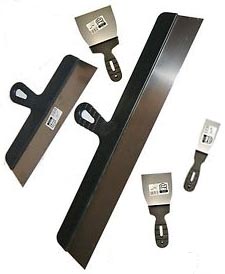
 If you ever tried to hide the screws and tape on new drywall and compared yourself to professionals who do it, you know how hard it is, even though they are using a simple tool. Skills with those drywall knives are a finisher’s livelihood, and using them takes considerable practice. Using rewards is like that: simple tools and deep practice are just as necessary. When the skills are there—zip-swish—the faults vanish.
Like the walls around us, it’s easy to forget that being positive in times of mistakes is probably the most fundamental tool of being an effective educator or parent. As is true with all skilled trades, using rewards effectively takes practice. Skillfulness appears after many repaired mistakes.
It’s time to address what it takes to be the provider of positives in situations where nothing seems to be working. A glance through the menu of topics under the heading Leading and Caring for Children can remind us of how much one has to learn to do well before we arrived at this point. Now we have the background to peer down into this fundamental.
In Enterprise Talk, above, I presented what I know about one kind of reward, social rewards. In that discussion I drew a strong distinction between the widespread, habitual mistaken practice of praise and more effective alternatives. No Praise was an essential prohibition—which had to stop in order for non-verbal recognition, intrinsically phrased responses and narration to develop enough to become effortless tools in leadership and care. Now it is time to raise the complexities of using all types of rewards.
Types of Rewards
Nutritive Rewards
Nutritive rewards are food rewards, such as candy and ice cream. The first ones I ever used were sweetened cereal. We called them primaries then, because one didn’t have to learn to enjoy them. This new labeled “nutritive” is a bit better, I think, because it calls to mind healthy food: granola bars, energy bars, dark chocolate, fruit, fruit juice, trail mix, pretzels, etc. The word guides me to think better about them.
Food rewards are powerful. Orca whales leap high into the air for food rewards. Elephants can balance on their forelegs for food rewards. When one is hungry — really, really hungry — one will do almost anything for food. I know because I did regretful things to get food when I had not eaten for two days.
Social Rewards
These are the myriad things people can do that send positive messages to other people. A major distinction must be made among the the kinds of messages sent socially, because personal opinions and personal judgments are not facts.
Praise

Praise offers judgements or opinions. “Good work.” “That’s nice.” “Outstanding!” “I like the way you did that.” Praises are evaluations spoken in words of one person’s personal reality. That distinction is one of the reasons the Behavior Management Protocol started with how we language reality. Personal reality is unreliable, yet our culture simply assumes that any positive expression given to someone is good to do without looking at whether it works or not.
In issuing a statement of praise, the evaluator is implying that they have a right to pass judgment and determine worth. The very utterance itself, however well-intentioned or upbeat, immediately establishes a power differential between the speaker and the receiver. It is as if the speaker is at a higher level, like a judge in a courtroom, naturally assuming judging is part of the job, unaware of its unfortunate effects.
Praise is weird. Here is an example of how weird it can get.
The children are moving from free play to circle time. Two darlings have come to circle right away, Ellen and Maggie. The other children, especially “those wilder boys,” keep running around being silly. The adult says in an effort to be positive, “I like the way Ellen and Maggie are sitting at circle time.” Ellen and Maggie look at each other and smile. I think most dispassionate observers of the scene would see that “those wilder boys” could care less. They are having lots more fun NOT going to circle. It’s possible to imagine them thinking, “She is trying to manipulate us. We don’t stop doing what we enjoy doing, because we want her to like us. We have our own lives and we want to make our own choices in our own time.” The dispassionate observer can see the clear evidence that “I like the way…” doesn’t work, yet the adult continues the practice.
It’s crazy. I have seen this over and over again, and each time I feel sad for Ellen and Maggie, who seem locked in the unfortunate trap of seeking approval. We might find considerable agreement that in trying to manipulate the boys, the adult’s praise of the girls is contrary to the girl’s best interests.
To be fair, praise can be effective when it is NOT directed at the individual but at another person — a colleague, boss, or parent. To Mom, “I wanted to show you Ellen’s clay sculpture she made today. Isn’t it amazing?” When I have watched sideways praise, as if the child is overhearing a conversation not meant for them, I have found children listening carefully to what is being said.
Also to be fair, praise is better than disparagement. To say anything positive at all is a positive step upward for people with habits of discounting and criticizing others. Educators ought to have worked beyond that problem; although a teacher might start out with praise, they have a professional obligation to stop it and move on to recognition.
Recognition
Recognition offers an observant regard. Included here are both verbal and non-verbal messages that convey one’s noticing. No judgment is involved.
 Nonverbal: wink, pat, smile, gestures, falling on the floor in a faint, hitting oneself in the head.
Vocal: laugh, make odd sounds, whistle, zuppa zuppa, wow.
Description: “The floor is clean. You found a way to do that. I saw you brush your teeth.” These are facts everyone can see.
Narration: “You are adding an additional color. Marsha gave Emily a pen. The gang comes to the rescue.” An action that is presently occurring is described by a narrator, like a sportscaster’s play-by-play offering a picture of what is happening.
 Activity Rewards
These are fun things to do, especially getting to do things together. Getting to go to the park. Playing catch. Throwing water balloons.
Included also are toys and other tangible gifts, such as a matchbox car or a new hair ribbon. More about activity rewards comes later. These are quite powerful.
General Rewards
 General rewards are as meaningless as the word “general.”
Marks on a chart.
Tally counts.
Stickers on the refrigerator.
Teddybear markers in a jar.
Money.
None of these have any inherent value; their worth arises from what you can do when you cash them in. For example, “When the jar is full of teddybears, we’ll have a pizza party.” “If you get three checks this week, we will go to the park on Saturday.” “If you have $10,000,000, you can buy a yacht and moor it stern first in Monaco. I’d be honored to visit you.”
Considerations in Using Rewards
Natural Versus Artificial Activity Rewards
It’s interesting to think of activity rewards very broadly. Activities are the daily flow of life. Some things during the day one enjoys, such as listening to music, calling a friend, cooking, or taking a nap. Some things one may not enjoy, such as cleaning the bathroom, washing dishes, or paying bills. All of these are activities; some could be thought of as rewards. Rather than artificially add an activity, one can simply make a already enjoyable activity contingent upon completing a non-enjoyable activity. This is the Premack Principle, since David Premack was the first to research it. I call it Grandma’s Law. After you eat your peas, you can have dessert.
Implementing a contingency, holding away a desirable activity until another activity is completed, is a one-sided application of power. Therefore, we are immediately drawn into ethical issues. If an enjoyable activity is made contingent by someone else, we have a reward being a manifestations of someone else’s agenda. An example might be when Mom mandates piano practice before outside play. Outside play is artificially attached to manipulate, for better or worse, the child’s practice on the piano. It is a contingent reward. If rewards are non-contingent — such as hugs, love, affection, admiration, fun, a new tie, a Valentine card — without an agenda, the message doesn’t come with a manipulation. The way a reward is used is an ethical decision.
I invite you to do this exercise. It’s Not the Reward PDF
I have found that exercise to be useful here, and worth the small amount of time it takes to do. It defines
Hopefully the distinction between contingent rewards and non-contingent rewards should be clear. You should also be able to see how hurtful one can be with rewards. Dicey.
Intrinsic Rewards
If you consider your own life, you might be able to see the most powerful kind of rewards at work. You probably do things that are hard to do or take a skill you had to develop over time. I can bake bread; it took me a long time to learn to do it well. My partner can knit amazing clothing. Where is the reward in baking or knitting?
If you are studying Leadership and Care with others, I invite you to list out a couple of skills you have that others admire, and then write down the answers to these two questions before you go on.
1. What is in it for you? Why do you keep doing these things? Where is the benefit to you?
2. What was it like in the very beginning when you first tried doing what you now do so well?
It may be hard to describe, but below are examples of the kinds of things people have said when I asked them to do that task.
- satisfaction
- independence
- competence
- pride
- feeling capable
- feeling of growth
- achievement
- feeling of making a difference
- happiness
- evidence of having added a new skill or ability
- being more mature or established
Note that these are not given to you by anyone else; they are internally perceived and very real. Externally given rewards are called extrinsic rewards. These internal rewards are called intrinsic. Some people have listed money as one of the rewards for them; that’s a general reward. Others have said they enjoy the thanks of others; that’s a social reward. But it’s these intrinsic rewards that most often maintain diligence, excellence, and contribution, even though the work may be hard.
Rewarding life skills are usually not very rewarding in the beginning when intrinsic rewards are usually not present. My initial bread making was a mixture of joy and disapointment. One time I forgot the bread was rising in the oven. When I finally remembered, it had filled the entire oven. Skill development requires a certain a level of doggedness in the beginning. It is easy to give up, like piano lessons for example, which is one reason people find the support of those with life experiences to be so valuable.
Five Kinds of Rewards
 We have identified the five types of rewards — nutritive, social, activity, general, and intrinsic. Usually these are arranged for the benefit of the client, but often times those arrangements trap one in artifice.
Most of the time in education we don’t have to use arranged rewards. We can be guided by our care and good will to speak truthfully and naturally. Like in Enterprise Talk, we honestly convey what we value. Recognition by non-verbal, vocal, descriptions and narrations works just fine. In extra special moments we can describe the intrinsic feelings we have had in our own lives. That’s normal.
For example, a child shows me a painting she has done, looking expectantly for a reaction. I could just look and enjoy it, smile, whistle, describe it, or say, “You’re showing me what you’ve done.” All of these are social rewards offered without manipulation. I can be authentically present using any of them. If I wished to go further and add some spice, I could talk about myself using the idea of intrinsic motivation. I call these Intrinsically Phrased Responses.
- “That sure looks like fun to me.”
- “I enjoy painting because I discover something about myself each time I paint.”
- “I like inventing new things, probably like you do, too.”
- “The more I paint the better I get at making colors work the way I want.”
- “I get happy doing that kind of stuff.”
Not everything is normal. You probably reached this page through the sequence of the Behavior Management Protocol, after reading about Sandy, Jeremy, and Charlie. It is one of the interesting things about tough behavior challenges that the child usually is the one doing the manipulation. Children, especially those with high social intelligence, rapidly learn to make adults very angry very quickly by playing games with social attention. Arguing is a game. Running away is a game. So is screaming or hurting someone in order to get noticed. It often works, for most people are at a loss about what to do when social rewards don’t work.
Since we are addressing difficult behavior using the protocol, we are facing the problem of using arranged rewards in an authentic, caring, systematic way that not only avoids being trapped but also is in accord with our values.
Avoiding the Traps of Arranged Rewards
A trap. I don’t want to be locked into artificial arrangements, such as always having to give children stickers and lollipops for doing what they ought to be doing for their own benefit.
A value. I view the child as strong and powerful as someone who leads their own life in accord with their own possibilities.
The following story of Donald helped me understand a way to use arranged rewards that solves this problem.
Donald
Donald dashed into the house. “Hey! Where is supper?” No answer. “Anybody home?” No answer. Donald went into his bedroom. He found a bright yellow sheet of paper on his pillow. It had this on it..- / -.-. .- -. -.– / -.. .-. / ..-. — .-. / -.– — ..- / .. … / .. -. / …. .- .-. / -.. . …- .- /
Donald knew his father wanted him to learn various outdoor skills, but with so many things to do he just couldn’t find the time to study knots or learn Morse Code for emergencies. Unable to read the code, he threw it aside. He wandered aimlessly around the house, but his curiosity grew, and he returned to the note. He found the handbook with Morse Code and gradually deciphered the note.
A CANDY BAR FOR YOU IS IN THE HALL DESK
Several days later Donald found another message which when decoded told him of the family outing to a campground on the weekend.
His father left him a series of longer messages which when decoded led him from one message to another message over a period of weeks to finally discover the gift of a headlamp.
Donald began to translate the messages easily. He began to read the code as if the dots and dashes were letters. Having found this skill he became interested in tying different kinds of knots.
When I first read Donald’s story, I had one of those “ah-hah” moments. Note the series of reward types:
1. nutritive (candy bar); 2. activity (family outing); 3. general (series of decodings, like tally marks over time leading to an activity reward of a headlamp); 4. intrinsic (competence).
Note how many nutritive rewards — one. Note how many activity rewards — one. Then general rewards are used without any tangible cash-in until after a number of events which had no reward attached. Number of rewards earned — one. The procedure of moving quickly in that order has been my guide. Most of the time I start with an activity reward and skip the nutritive reward step.
I have occasionally started with nutritives. I taught my preschool class to walk safely across the very busy Martin Luther King Jr. Boulevard to get to the park. I used the residential street crosswalk that had no traffic Each person who held their partner’s hand, stayed close to the pair in front, and stayed within the lines of the crosswalk got one Cheerio. Those who lost out going over didn’t lose out crossing back. After that, no Cheerios needed. We were in normal conditions, where I only commented on the successes. Those two little Cheerios were an indicator of my seriousness.
The other thing I learned from the story of Donald was to be extremely careful to talk constantly about the intrinsic rewards. “Doesn’t it feel good to hold hands and cross the street safely? You are getting big. If I were you, I’d be very proud to be in this school.”
Rules for Arranged Rewards
Here are the guidelines whenever you find yourself having to use arranged rewards, which are usually part of the Management Protocol in (1) choosing a new behavior to reward or in (2) a contract for non-occurence.
Rule #1
Use a series of activity rewards, immediately moving to general rewards. Begin with nutritive rewards if it seems necessary to help the learner connect a reward to his or her actions. A food treat makes it clear that the manager means business.
Rule #2
Talk about the intrinsic rewards, the good feelings inside, whenever you can. I refer you to Enterprise Talk chart for intrinsically-phrased responses. I keep this posted on the wall of the classroom as a reminder for everyone.
Rule #3
Avoid social rewards. As you saw in the stories of Sandy, Jeremy, and Charlie, attention, a social reward, was maintaining the difficult behavior. Often these difficult children are adept at manipulating the social situation, so avoiding social rewards is essential when using arranged rewards.
Rule #4
Choose rewards that convey your values. Donald’s father chose rewards related to outdoor experiences which he valued. You can do this for yourself. For example, reward yourself by buying comfortable exercise clothes as a reward for exercising. You can reward a child with a trip to the library for reading conveys your values. If you offer food or candy, you are saying food is a comfort, which may not be a good message to send. If you say, “I like it when you clean your room,” you are saying that my approval is important. This is another reason to avoid praise!
Non-contingent Social Rewards
I don’t mean to imply that we avoid social rewards for the manipulative children. Our attention, interest, non-verbal and vocal actions are essential. We give them non-contingently along with our constant, unconditional positive regard.
Recalling the Optimal Way twenty-eight pages ago on the What We Want page, the people who are unlikely to have children with troubling behavior are fountains of warmth and good cheer. As with the drywall taper/finisher’s skill with a drywall knife, it can take the rest of us years to learn to use positives well. It’s the center of the craft.
-
Navigation Links
EXAMINE THE BEHAVIOR
INITIATE A PROGRAM